
Put your menu forward

Last doubts

Still scared to order something unfamiliar? Read this, then decide

You have read a menu or two, you have looked at the plates, and the order you always make is still quietly winning. This page is written for that exact minute, and every answer on it ends with you choosing something rather than putting it off.

Three sorts of question turn up here. The first is what Try a Menu actually is, because a good part of the hesitation comes from waiting for it to behave like a booking tool or a review site and being annoyed when it does not.

The second is how to read a card while nerves are doing the reading for you, and how to keep an unfamiliar order small enough that a miss costs one dish instead of the whole evening.

The third is where our part of the job stops and the kitchen takes over. We work from menus and from words. They work from what came in this morning, who is on the pass tonight, and what they are able to change for you.

What this page cannot answer

Nothing written here stands in for a word with the venue itself. Ingredients and allergy risk, how you get into the room and around it, how long a table is held, and what the bill comes to are all theirs to answer. When any one of those decides your order, ask them first and take their answer over ours.

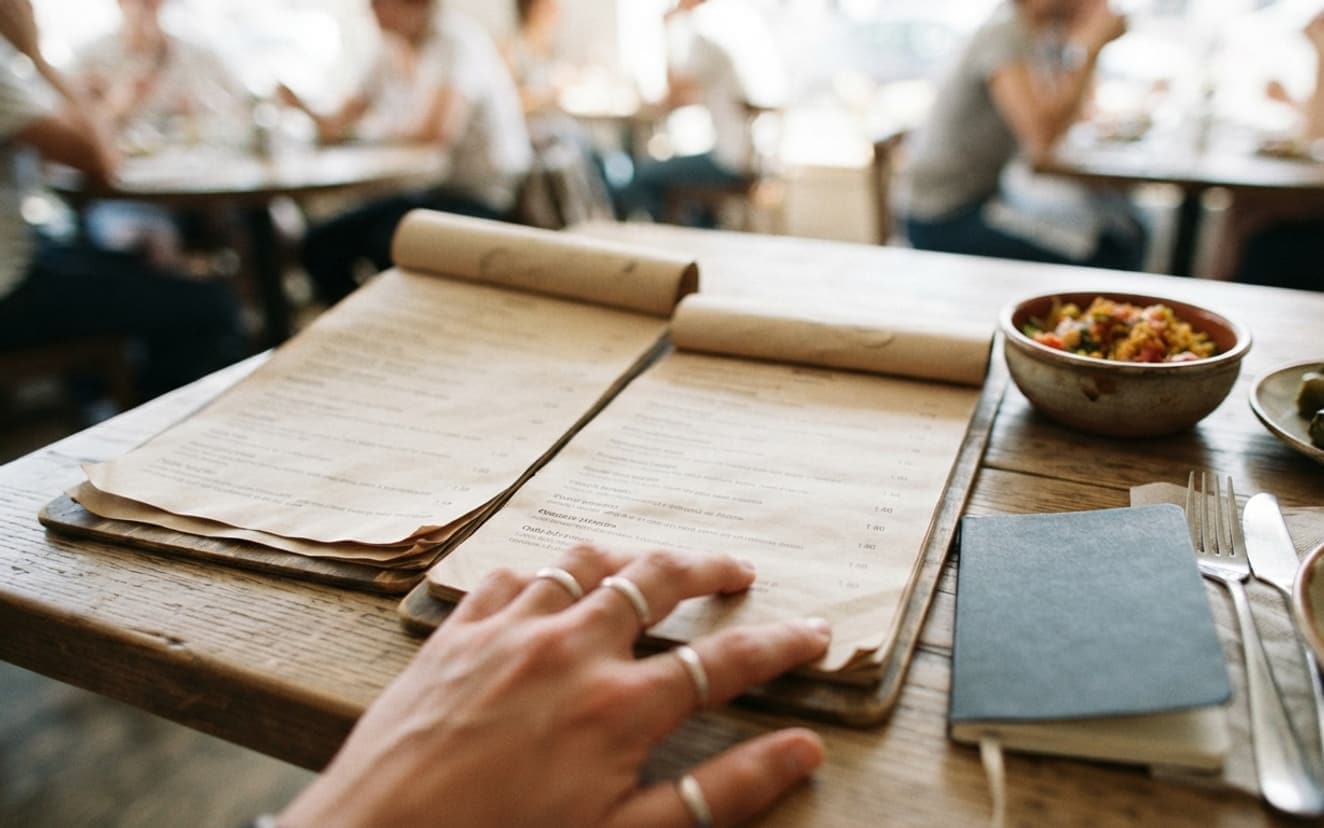
Two open menus and a small notebook laid side by side on a table

Do not read this top to bottom. Take the worry you actually walked in with, jump straight to it, and close the tab once it has been answered.

No scoreboard here

How is this different from reviews, delivery, and booking tools?

Those tools rank rooms, hold seats and move food across a city. This one sits down with the card in front of you and names one dish worth risking, in words you can say out loud to whoever takes the order.

What it is built to do

Read menus kitchens are serving now, pick out one or two plates that would make a sane first try, and hand you the language for them: the name printed on the card, what is actually in it, and why it is worth being curious about tonight.
What it will not do

No seat is held here, no order reaches a kitchen, no card is charged, and no argument about which restaurant is better gets settled. There are no stars on any page, no scores, and no table of winners waiting to be checked.

Where it sits beside your other tabs

Keep the map for finding the street, the booking tool for holding the table, the delivery app for nights you stay in. Nothing here competes with any of them. This one has nothing to do until a card is actually open on the table.

Running all four at once is completely normal. Trouble only starts when you expect a first-try suggestion to hold your table, or expect a booking confirmation to tell you what to eat once you sit down.

Keeping the risk small

What if the unfamiliar dish ends up being the wrong call?

Then you eat one plate you do not love and the evening carries on around it. The whole craft is setting the table up beforehand so a miss costs you one dish and never the meal.

Start from a plate
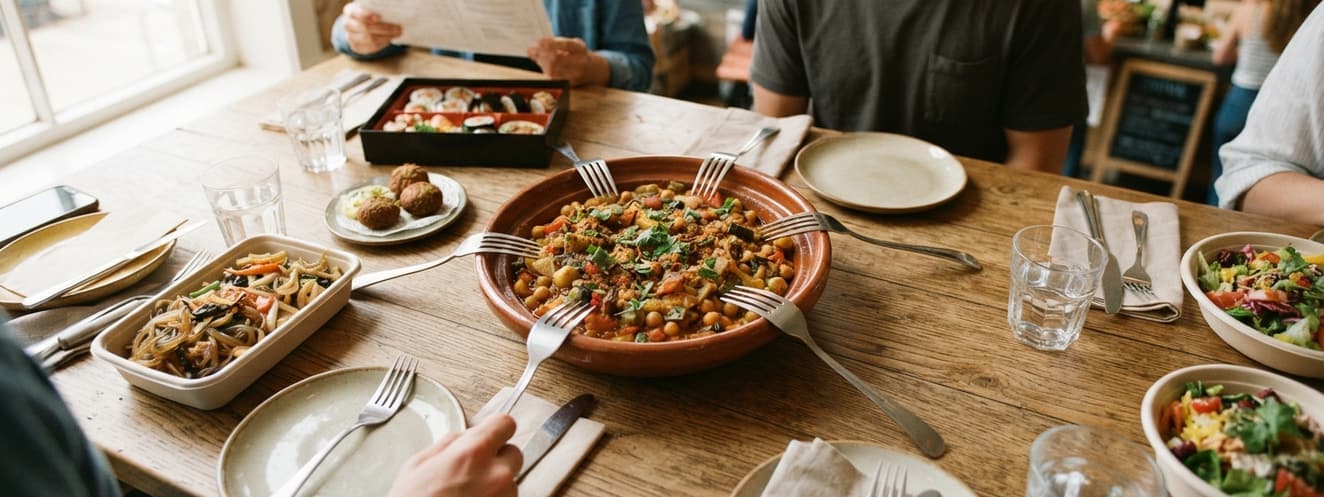
A shared bowl in the middle of a table with four forks resting against the rim
  • Keep something you trust on the table Send the unfamiliar plate in alongside a side or a starter everyone already likes. A miss turns into a taste rather than a hole in the meal, and nobody goes home hungry because of your experiment.
  • Put the strange one in the middle An unfamiliar main is far easier to face when it is shared. Four forks in one bowl turn a private gamble into the thing the whole table talks about, whichever way it lands.
  • Ask the table how far it wants to go If you are the one who booked, ask before anyone starts reading dish names aloud. Somebody came for comfort and somebody came to be surprised, and deciding that for all of them is how a good idea turns into a sulk over the bill.
  • Start small enough to run it twice A lunch portion, a half plate, a single skewer. Keep the first try that size and it stays a manageable experiment rather than a test of bravery you have to pass in front of your friends. Even when the plate misses, you walk out knowing one real thing about what you like.

Asking out loud

When should I speak to the venue about a dish before I order it?

Whenever their answer would change what you order. Staff field these questions right through service, and one plain question costs everybody far less than a plate that goes back untouched.

What a pick claims

Four moments are always worth the question:

  • Something in the dish has to be avoided, whether that is an allergy, a diet, or a strong dislike you would rather not meet halfway through a mouthful.
  • The portion is a mystery and the card will not say whether it feeds one person, two, or the whole row of you.
  • One element could be held back, swapped, or served on the side, and that change is the difference between ordering the dish and walking past it.
  • The description reads beautifully and still leaves out the part you care about: how hot it is, how long it takes, or what turns up beside it.

Ask straight, and ask about the plate rather than about yourself. What is in it, how is it cooked, how big is it, what would you put next to it. A busy server can answer any of those in one breath.

What nobody can promise is that you will love it. Pushing staff to guarantee an unfamiliar dish leaves them nowhere to go but the safest line on the card, which is the exact order you came here to break.

We can point at a plate that reads like a good first try. Only the kitchen can tell you what is in it tonight, what changed this week, and what they are willing to adjust, so their word wins over anything written on this page.

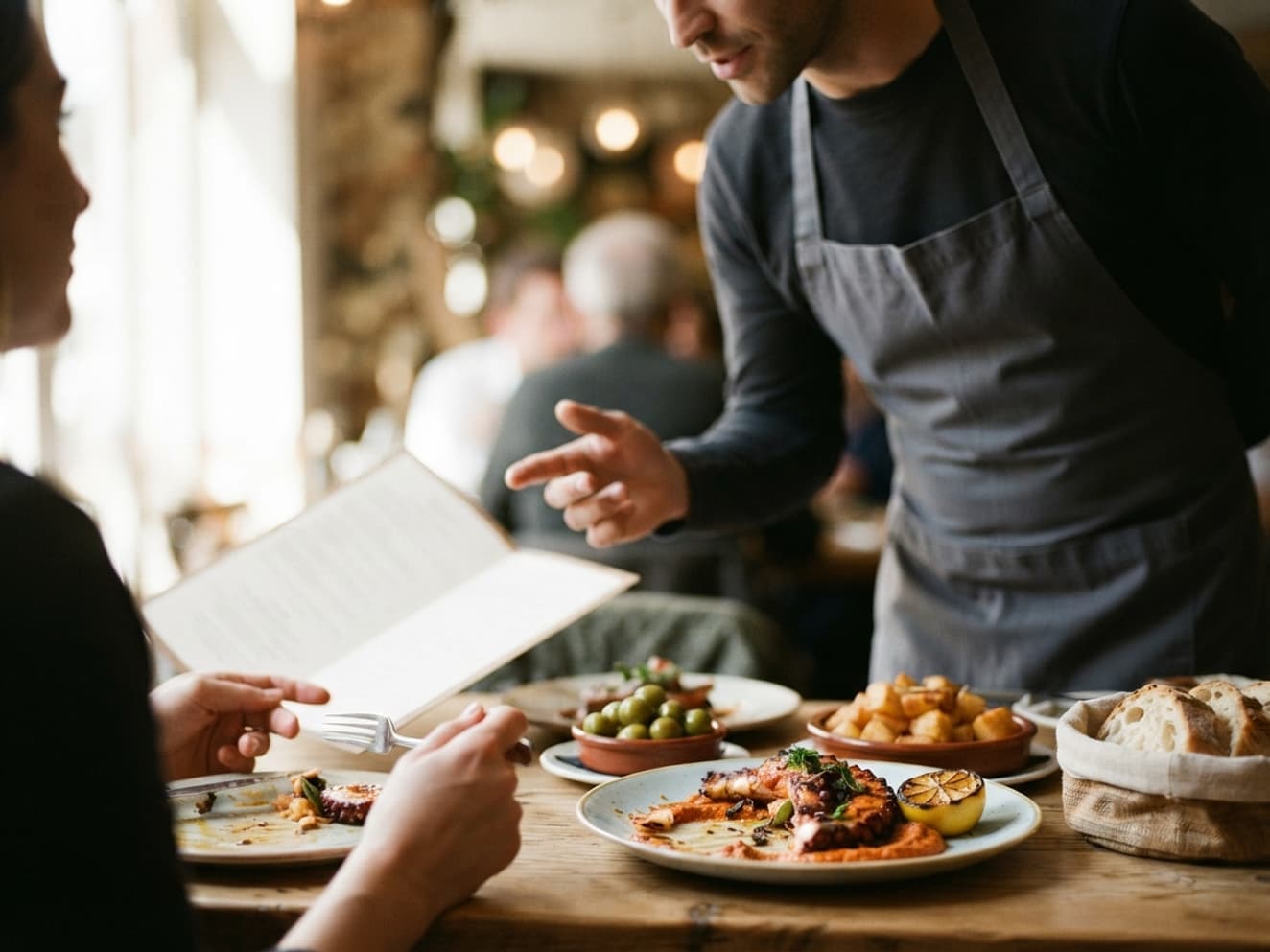
A server leaning in to answer a question at the edge of a lit table

When the card has moved on

What if the menu in front of me does not match what I read here?

Trust the menu in your hands. Kitchens rewrite cards, drop dishes and move prices without telling anybody, and the one in front of you is the only version being cooked tonight.

Open a menu we just read

Every line we write comes off a menu as it stood on one particular day. When the card in front of you says otherwise, the card wins, and none of our wording is worth arguing over with somebody who is waiting to take your order.

If what you are holding is clearly out of step with what we wrote, send us a sentence or two: the venue, the dish, and what the menu says now. Calm and factual gets fixed fastest, and it goes to firsttry@tryamenu.com.

A correction takes a minute, and the person it reaches is whoever opens this page after you with an unfamiliar card in their hands. Send it, then go back to the dish you were hesitating over and order it.

Take these straight to the venue instead

Anything urgent or personal belongs with the people in the room: an allergy that was mishandled, a booking that fell apart, a total on the card machine nobody can explain, or the way somebody spoke to you. We cannot act on any of that from here, and an evening spent writing to us is an evening the venue could have spent putting it right.